


If there’s one detail that can completely change the way a room feels, it’s the lighting. You can spend time choosing beautiful furniture, finding the right paint color, and adding all of those finishing touches, but then you turn on a row of bright recessed lights, and suddenly your cozy living room feels a little more like a doctor’s office.
Because of this harsh feeling, homeowners have been looking for alternatives to bright overhead lighting. That’s where ambient lighting comes in.
What Is Ambient Lighting?
Ambient lighting is the softer, overall glow that fills a room without coming from one intense light source. It can be a table lamp, wall sconce, picture light, chandelier, pendant, or even a few candles tucked into the right spots.
The idea is to layer those sources together so your recessed lights aren’t doing all of the work.
How to Incorporate Ambient Lighting Throughout The Home
Start with lamps. No, you can’t just put one lamp on a side table and call it a day. An interior designer in Madison, AL recommends putting several smaller collections of light around a room rather than relying on one big light source from above.
A pair of lamps on a console can create a warm glow as soon as you walk into a living room. A floor lamp beside the sofa is perfect for reading or relaxing in the evening. Even a small lamp tucked onto a bookshelf or cabinet can make a difference. You really just need to think about how you spend time in the room and where you naturally want a little extra light.
Don’t forget the walls. Sconces can be such an easy way to bring warmth into a room. Try them on either side of the bed, beside a fireplace or mirror, or even along a hallway that feels a little dark.
You can also try a picture light. They give artwork a little attention during the day and create a soft glow once the sun goes down. It’s a small detail, but it can make a room feel much more finished.
And if you’re not interested in hardwiring anything, don’t worry. There are plenty of rechargeable and plug-in sconces available now, so you can get the look without opening up your walls.
Let your light fixtures be part of the room. Lighting should not be something you choose at the very end of a project. Your fixtures can be just as important as your furniture and accessories.
A beautiful pendant over the dining table can anchor the entire room. A sculptural chandelier can make a bedroom feel much more special. Even a simple lamp with a linen shade brings in softness and texture.
When you start a project with lighting in mind, you’ll see how much easier everything comes together at the end.
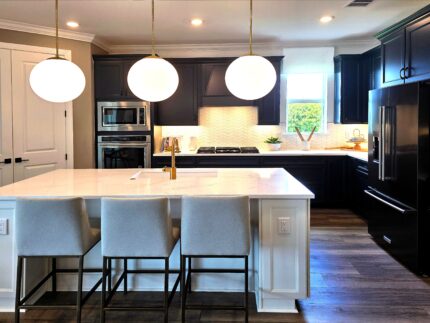
Make the kitchen feel cozier. Kitchens are often where designers see the biggest lighting problem. You absolutely need good task lighting when you’re cooking, but you don’t necessarily need every light blazing once dinner is over.
Under-cabinet lighting is a simple way to make a kitchen feel warmer in the evening. You can also hang pendants over the island, and if you have the room, try a small lamp on a countertop or open shelf.
Remember: recessed lighting isn’t inherently bad. There are plenty of places where it makes sense, and sometimes you really do need it. The issue is when recessed lights are the only source of light in a room.
Instead, try thinking in three layers: ambient lighting for that overall warm glow, task lighting for things like cooking and reading, and accent lighting to draw attention to the pieces you want to highlight.
And if you can, put your lights on dimmers. Being able to turn the brightness down in the evening makes a surprisingly big difference.
Make Your Home Feel Ever Warmer
The best lighting is often the lighting you don’t consciously notice. You walk into a room at night, and it simply feels good.
So if your home feels a little too bright, flat, or sterile once the sun goes down, you probably don’t need to start over. You may just need to add a few more sources of light and give them different jobs.
