


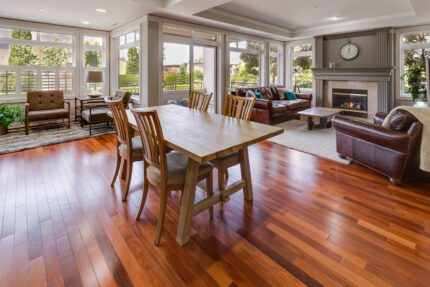
A common question homeowners ask when decorating is whether all the wood in a room needs to match. If you ask any interior designer, the answer would be a resounding, “Absolutely not!”
Contrary to popular belief, mixing your wood tones and finishes can make a room feel warmer, more interesting, and much more personal. After all, no one wants a living room that looks like a showroom display.
The key to achieving this look is knowing how to do it.
Expert Advice for a Balanced Look
Here are a few tips for mixing wood tones in any room.
- Start with one tone to act as your guide. Think about the biggest wood element in your space. It could be the flooring, the cabinets in your kitchen, a dining table, or any large piece of furniture. Because it’s the most dominant element, you can use that as your starting point, then pull lighter or darker wood tones to complement it, says an interior designer in Montgomery, TX. From accent tables to chairs, shelving, or picture frames, you have plenty of room to incorporate and play with colors that don’t match your main tone exactly.
- Look at undertones. They’re a small detail, but an important one. Wood has warm, cool, or neutral undertones, and they don’t all play nicely together. This doesn’t mean you can’t mix the two types together, but you should see how they look in your home before making a decision. For example, lighting can completely change the appearance of a wood with warm undertones depending on your setup. So, what looked great in the store or in a virtual room creator may look harsh in real life.
- Don’t avoid contrast. Whether it’s wood or your general color palette, contrast gives a space personality and depth. What you should avoid is using two woods that are almost the same but not quite. Going this route can make it look like you tried to match but missed the mark. When you’re mixing woods, it’s better to notice there’s a genuine difference in tone than a subtle one that feels questionable.
- Break things up. Just like any good home design, you have to break things up with other textures to pull a room together. Rugs and upholstered furniture can divide a wood coffee table from your wood flooring, or upholstered chairs can soften the look of a wood dining room set. Play with textiles like pillows and curtains to bring color into the room and soften the area’s otherwise hard feel.
- Repeat wood tones, but don’t use matching furniture. Instead of getting the matching set from the showroom floor, echo your walnut coffee table with a walnut frame on the wall or a walnut accent on a nearby console. Small but meaningful connections like that make everything feel intentional and cohesive at the same time.
Remember, your home doesn’t have to be perfectly coordinated. A little variation is what gives a room personality. Don’t be afraid to mix things up, especially with your wood tones, and let your home look like you actually live there.
