


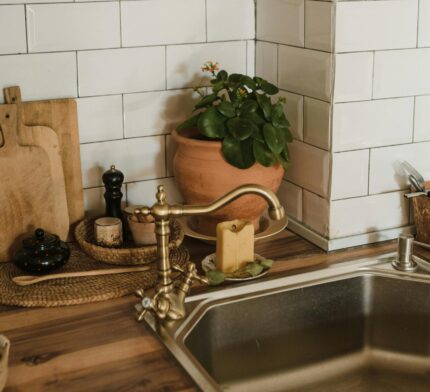
Brass has made a strong comeback in kitchen design. It offers timeless warmth and pairs beautifully with a range of cabinet colors, countertop materials, and backsplash styles. But if you’ve ever gone down the rabbit hole of brass finishes, you’ve probably discovered that not all brass is created equal. Two of the most popular choices—unlacquered brass and polished brass—may share the same golden roots, but they each bring a completely different personality to your space.
If you’re debating between the two (or wondering if you can mix them), here’s a breakdown of what to know before making your choice.
Understanding the Difference
Unlacquered brass is exactly what it sounds like—brass without a protective coating. As it’s exposed to air, moisture, and touch, it develops a natural patina. This aging process can bring out deeper, richer tones, giving the hardware a lived-in, character-rich appearance.
Alternatively, polished brass is coated (often with a clear lacquer) to keep it shiny, reflective, and consistent in color. It resists tarnishing and requires less upkeep to maintain its original appearance. Overall, it gives an elegant and refined feel and provides high impact.
Where Each Brass Works Best
In spaces where a little wear-and-tear will feel intentional, like on cabinet pulls, faucets, and pot fillers, unlacquered brass works great. Because it reacts to its environment, it’s especially suited to a high-traffic kitchen that embraces charm and authenticity. It’s often seen in English country kitchens, Mediterranean-inspired spaces, and modern rustic designs. So, if your dream kitchen is warm and effortlessly collected over time, unlacquered brass is your friend.
Polished brass is ideal for areas where you want a clean, polished focal point, such as pendant lighting or a statement range hood. It works well in formal or traditional kitchens where a more pristine and uniform look is preferred. Its mirror-like finish adds a touch of glamour and works beautifully in classic, transitional, or contemporary kitchens.
Maintenance Considerations
One of the biggest deciding factors between unlacquered and polished brass is upkeep. Unlacquered brass will show fingerprints, water spots, and tarnish more quickly. Some homeowners love this and never polish it, letting the patina evolve naturally. Others give it a light polish every so often to maintain a slightly brighter tone without removing all the character. Then there’s polished brass, which requires less frequent cleaning but needs gentle care to avoid scratching the lacquer. A soft cloth and mild soap are usually enough to keep it gleaming.
Can You Mix Them in the Same Space?
Yes, you can mix unlacquered and polished brass in the same space. When done thoughtfully, combining the two can create depth and visual interest, but the key is balance. For example, you could use polished brass for your lighting fixtures to add sparkle overhead, while incorporating unlacquered brass hardware on cabinets for a softer, more tactile feel, says an interior designer in Chicago, IL.
Another option is to separate the finishes by zones, such as polished brass around the sink area for a bright, reflective look and unlacquered brass on the island to give it a grounded, well-loved vibe.
How to Decide Which Is Right for You
Choosing between unlacquered and polished brass in your kitchen isn’t just about hardware; it’s about the overall mood you want to create. Ask yourself: Do you want a perfectly consistent look that stays the same for years? Go with polished brass. Do you appreciate materials that change over time, telling a story with each touch? Unlacquered brass is for you. Or do you like layered design? Consider mixing both for a curated look.
Whichever you choose, brass can help make a statement that will set the tone for your entire kitchen.
